I've walked hundreds of builder sales offices across Las Vegas over the past 18 years. I've seen buyers save $80,000 by knowing the right questions to ask. I've also watched buyers lose that much — sometimes more — because they walked in alone and assumed the friendly person behind the desk was looking out for them.
New construction in Las Vegas is booming. Builders like Toll Brothers, Lennar, KB Home, Pulte, Taylor Morrison, and Shea Homes are actively developing across Summerlin, Henderson, North Las Vegas, and the Southwest. The incentives right now are exceptional. But buying a new build is fundamentally different from buying a resale home, and the mistakes buyers make can cost tens of thousands of dollars.
This guide covers everything I tell my own clients before we set foot in a model home.
Why You Need Your Own Agent at the Builder's Sales Office
This is the single most important thing I can tell you about buying new construction: the sales representative inside that model home works for the builder, not for you.
The builder's on-site agent is a salaried or commissioned employee of the builder. Their job is to sell you that builder's homes at the highest possible price with the fewest possible concessions. They are trained, they are skilled, and they are not negotiating on your behalf.
When you bring your own agent — a buyer's agent — you get someone whose sole obligation is to protect your interests. Your agent can:
- Negotiate incentives, lot premiums, and upgrade credits that the builder's rep won't offer voluntarily
- Review the purchase agreement, which is a builder-drafted contract heavily weighted in the builder's favor
- Compare the builder's preferred lender terms against market alternatives
- Coordinate your independent home inspection (yes, you need one — more on that below)
- Track construction milestones and flag delays or quality issues before closing
Critical detail: most builders require that your agent registers you on your first visit to the community. If you walk into a sales office alone, sign the guest registry, and then try to bring your agent later, the builder will often refuse to recognize your agent. They've already "captured" you as an unrepresented buyer. Always call me before you visit any new construction community so I can either go with you or register ahead of time.
How Builder Incentives Actually Work
Builders in Las Vegas are currently offering some of the strongest incentive packages I've seen since the 2009-2012 recovery. But understanding how these incentives work — and what strings are attached — separates informed buyers from everyone else.
The typical incentive package in April 2026 looks like this:
- Interest rate buydowns (1-3 points): The builder pays the lender upfront to reduce your mortgage rate. A 2-point buydown on a $600K loan costs the builder roughly $12,000 but saves you $700+/month. This is the highest-value incentive available right now.
- Closing cost credits ($5,000-$15,000): Applied toward title fees, escrow, loan origination, and prepaid items. Some builders cover the entire closing cost on standing inventory homes.
- Design center upgrade credits ($20,000-$50,000+): Free upgrades to flooring, countertops, cabinets, appliances, and fixtures. The dollar amount sounds generous, but the builder's design center prices are typically 30-50% higher than what you'd pay a contractor after closing. A "$40K upgrade package" might represent $20-$25K in real-world value.
The catch with nearly all of these incentives: you must use the builder's preferred lender. Builders have financial relationships with specific mortgage companies (often their own subsidiary), and the incentive package is subsidized through that relationship. Using an outside lender usually means forfeiting most or all of the incentives.
That doesn't automatically mean the builder's lender is a bad deal. Sometimes the rate buydown plus closing cost credit makes their package significantly better than what you'd get from your bank or credit union. But you need to run the numbers side by side. I do this comparison on every new-construction transaction because the answer changes depending on the builder, the community, the specific lot, and the buyer's credit profile.
The Real Cost Beyond the Base Price
"The base price on that brochure is just the starting point. By the time you add lot premiums, structural options, and design center upgrades, the final number can be $100,000 or more above what you thought you were buying."
Every new-construction listing in Las Vegas advertises a base price. That number gets buyers through the door. The actual purchase price is almost always significantly higher. Here's where the real costs hide:
Lot premiums: $10,000-$80,000. Corner lots, cul-de-sac positions, lots backing to open space or parks, elevated lots with Strip views — all carry premiums. In Summerlin's guard-gated communities, premium view lots can add $60,000-$80,000 to the base price. Even in more affordable communities, a desirable lot position adds $15,000-$30,000.
Structural options: $15,000-$60,000. These are things that must be selected before construction begins — additional bedrooms, extended garages, covered patios, fireplaces, casita/guest suite additions, California rooms. Structural options are your only chance to modify the floor plan. Once framing starts, these decisions are locked.
Design center upgrades: $30,000-$100,000+. This is where budgets blow up. The design center appointment is an overwhelming experience. You'll spend 4-8 hours choosing flooring, countertops, backsplash, cabinets, lighting, plumbing fixtures, paint colors, and dozens of other finish items. Every upgrade is presented as a monthly payment difference, which makes a $15,000 flooring upgrade feel like "only $80/month." Across 30+ categories of choices, those increments add up fast.
My advice: set your design center budget before the appointment and stick to it. Focus your upgrade dollars on items that are expensive or disruptive to change later — flooring, electrical (outlet placement, pre-wires), plumbing rough-ins, and cabinet layout. Things like paint, hardware, and light fixtures can be changed affordably after move-in.
Standing Inventory vs. Dirt Lots
You have two paths when buying new construction: purchase a finished or near-finished home (standing inventory) or select a lot and build from the ground up (a dirt start).
Standing inventory means the home is already built or nearly complete. You can walk through it, see the actual finishes, and close in 3-6 weeks. The advantages are significant: you know exactly what you're getting, you avoid construction delays, and builders are often most aggressive with incentives on standing inventory because they're carrying the cost of a completed asset.
The tradeoff is that you're buying someone else's design choices. The flooring, countertops, and layout were selected by the builder's design team for broad appeal. You get no customization.
Dirt lots give you full control over structural options and design center selections. The build timeline in Las Vegas is currently 6-9 months from contract to close, though some builders are quoting 8-10 months depending on trade availability and permit processing. You'll make design center selections about 4-6 weeks after contract signing.
The risk with a dirt lot is time and market movement. If interest rates rise during your build, your rate lock may expire and your monthly payment changes. If material costs increase, some builders have escalation clauses that allow price adjustments. Read the contract carefully — or better yet, have your agent read it and explain exactly what the builder can and can't change after you've signed.
HOA Fee Stacking: The Cost Nobody Talks About
This is the expense that catches more Las Vegas new-construction buyers off guard than anything else. Master-planned communities in Las Vegas — particularly Summerlin — have layered HOA structures that can add $400-$600 per month to your housing costs on top of your mortgage payment.
Here's how it typically breaks down:
- Master Plan HOA: $50-$120/month. Covers community-wide amenities — trails, parks, community centers, landscaping of common areas. In Summerlin, this is the Summerlin Council HOA.
- Sub-Association HOA: $80-$200/month. Your specific neighborhood within the master plan has its own HOA covering neighborhood-specific amenities, private streets, and common area maintenance.
- Guard-gated / private community fee: $150-$350/month (if applicable). Communities like The Ridges, Tournament Hills, Mesa Ridge, and Reverence have additional fees for gate staffing, private security, and exclusive amenities.
- SID/LID assessments: $100-$200/month. Special Improvement District and Local Improvement District bonds are tax-like assessments that fund infrastructure (roads, sewers, parks) in new development areas. These are not technically HOA fees, but they appear on your property tax bill and increase your total monthly cost. SIDs typically run 20-30 years.
Add these up and a buyer in a guard-gated Summerlin community could be paying $500-$650/month in HOA and SID/LID costs alone — before property taxes. On a $700K purchase, that's an additional $6,000-$7,800 per year that doesn't show up on the listing brochure's "estimated monthly payment" calculation.
I pull the actual HOA and SID/LID schedules for every new-construction community I take clients to. The builder's sales rep will give you a general number. I give you the actual recorded assessments.

Negotiation Strategies That Work
Builders negotiate differently than individual sellers. You're not making emotional appeals or writing heartfelt letters. You're dealing with a publicly traded corporation (in most cases) with quarterly sales targets and regional managers tracking absorption rates.
Here's what actually moves the needle:
- Buy at the end of a quarter or fiscal year. March, June, September, and December are when builders need to hit sales numbers. Incentives peak during these months.
- Target standing inventory over dirt lots. Builders lose money every day a finished home sits unsold. Carrying costs on a $600K home are roughly $3,000-$4,000/month. That gives you leverage.
- Negotiate lot premiums, not base price. Builders rarely reduce the listed base price because it sets a comp that affects every other home in the community. But they'll negotiate lot premiums, upgrade credits, and closing cost contributions because those don't appear on public records.
- Get competing quotes. If you're considering two builders in the same area, let each one know. Builders track lost sales to competitors, and a sales manager with a target to hit will often match or beat a competing offer.
- Bring a pre-approval from an outside lender. Even if you end up using the builder's preferred lender, having an outside pre-approval shows you're a serious buyer and gives you a baseline to negotiate against.
You Still Need a Home Inspection
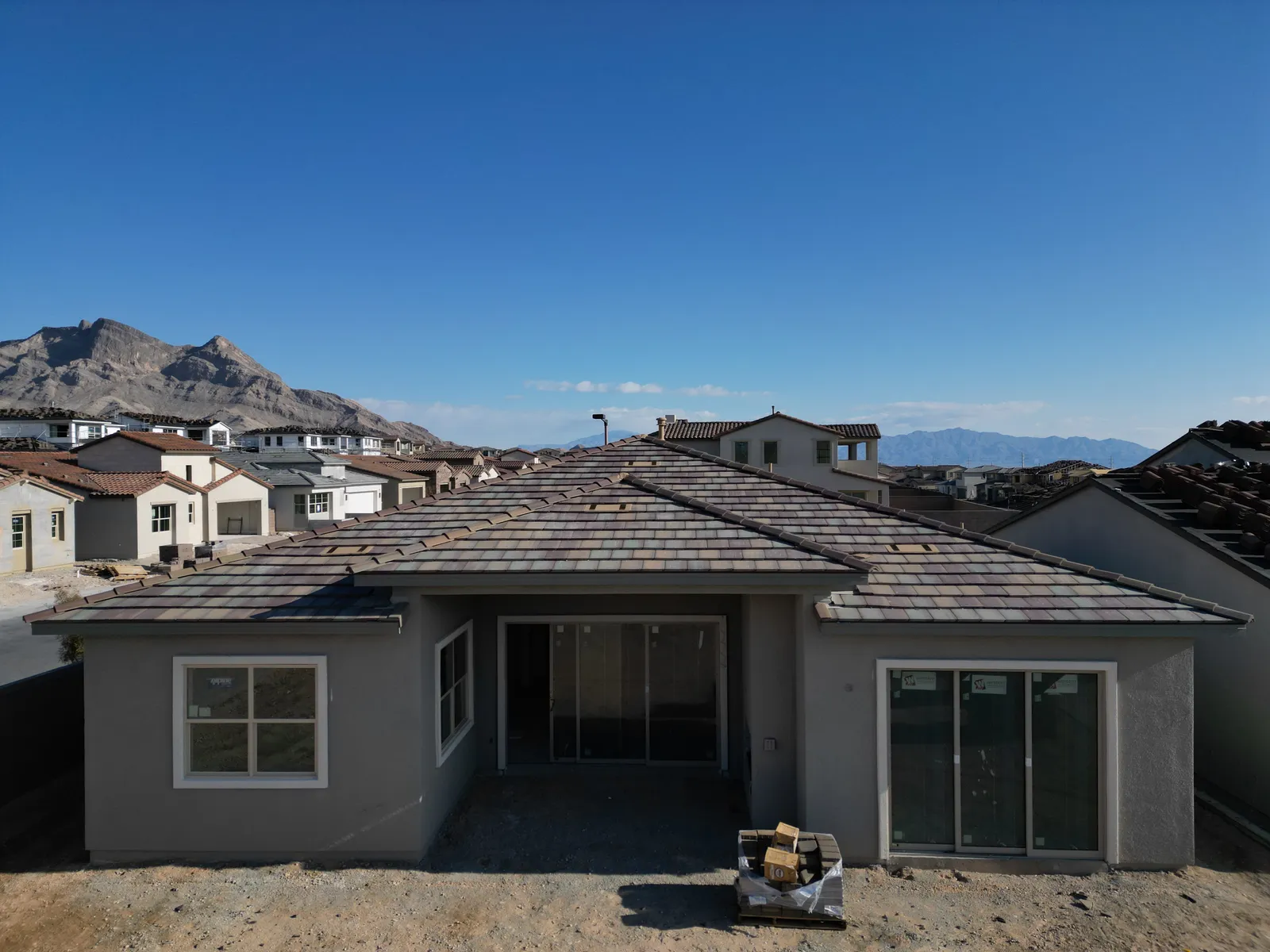
I hear this constantly: "It's brand new — why would I need an inspection?" Because new doesn't mean flawless. I've been present for inspections on brand-new homes that uncovered:
- HVAC ducts disconnected in the attic
- Plumbing leaks behind walls that would have caused mold within months
- Electrical panels with double-tapped breakers
- Roof flashing improperly installed
- Grading issues that direct water toward the foundation instead of away
- Missing insulation in garage-adjacent walls
These aren't hypothetical scenarios from a textbook. These are defects I've personally witnessed on homes built by major national builders in Las Vegas within the past three years.
Most builders offer a pre-close "blue tape" walkthrough where you mark cosmetic issues. That's not a substitute for a professional inspection. Hire a licensed inspector — separate from the builder, separate from your agent — to evaluate the home's structural, mechanical, electrical, and plumbing systems before you close. The $400-$500 inspection fee is the best money you'll spend in the entire transaction.
Design Center Tips from 18 Years of Experience
The design center appointment is where excitement meets financial reality. Here's how I guide my clients through it:
Know your "must-haves" vs. "nice-to-haves" before the appointment. Walk into the design center with a written list and a firm budget. The design consultant's job is to upsell you. They're excellent at it. Having a predetermined list keeps you anchored.
Prioritize upgrades you can't easily change later:
- Flooring throughout (ripping out tile or carpet after move-in is expensive and disruptive)
- Electrical rough-in (adding outlets, pre-wires for speakers, or EV charging after the walls are closed costs 3-4x more)
- Plumbing rough-in (adding a water line for a future refrigerator ice maker or wet bar)
- Cabinet layout and countertop material (replacing cabinets is a full kitchen renovation)
- Structural options like covered patios, extended garages, and bonus rooms
Skip the builder's upgrade pricing on these items:
- Light fixtures (buy after closing for 40-60% less at retail or online)
- Window blinds and shutters (aftermarket installation is significantly cheaper)
- Backsplash tile (a tile contractor will do it for half the design center price)
- Exterior landscaping (the builder's landscape package is basic and overpriced)
The Builder's Contract Is Not Your Standard Purchase Agreement
A resale home purchase in Nevada uses the Greater Las Vegas Association of Realtors standard purchase agreement, which is relatively balanced between buyer and seller. A builder's purchase contract is a completely different document — drafted by the builder's legal team, often 30-50 pages, and heavily weighted in the builder's favor.
Key clauses to watch for:
- Price escalation clauses: Some builders reserve the right to increase the purchase price if material or labor costs rise during construction. Ask whether the price is locked at contract signing.
- Delay provisions: Builders give themselves broad latitude on construction timelines. A "completion estimate" is not a guaranteed close date. Understand what happens if the build runs 3, 6, or 9 months late.
- Earnest money terms: Builder contracts often have stricter forfeiture provisions than resale contracts. Know exactly under what circumstances you can get your deposit back.
- Warranty limitations: The builder's warranty sounds comprehensive, but exclusions are buried in the fine print. Cosmetic items are often covered for only 30-90 days. Structural items may have binding arbitration clauses instead of litigation rights.
- HOA and SID disclosure: These disclosures are included in the contract package but are easy to overlook. Make sure you read and understand the actual dollar amounts.
I review every page of the builder's contract with my clients. The experience I bring from 18+ years of new-construction transactions means I know which clauses are standard and which ones need to be questioned or negotiated.
Which Communities to Watch Right Now
As of April 2026, here are the new-construction communities where I'm seeing the best value for buyers looking in the Las Vegas area. You can explore many of these on the Real Estate page or check the community profiles for deeper details.
- Grand Park Village (Summerlin): Multiple builders, $450K-$700K, strong incentives on standing inventory, newest village in Summerlin with excellent trail access
- Reverence (Summerlin): Pulte Homes, $700K-$1.2M, guard-gated, mountain backdrop, community pool and fitness center included
- Cadence (Henderson): Several builders, $380K-$550K, 50-acre central park, excellent schools, strong SID/LID awareness needed
- Valley Vista (North Las Vegas): KB Home and Lennar, $350K-$450K, best entry-level new construction in the valley right now
- Redpoint (Summerlin): Taylor Morrison, $550K-$750K, contemporary architecture, walking distance to Downtown Summerlin
The Bottom Line
Buying new construction in Las Vegas can be an outstanding decision — if you go in with your eyes open, your own representation, and a clear understanding of the true total cost. The incentive environment right now is genuinely favorable for buyers. But the process has more complexity, more hidden costs, and more contractual landmines than a typical resale purchase.
Don't walk into a sales office alone. Don't assume the base price is the final price. Don't skip the inspection. And don't sign a 40-page builder contract without someone on your side who's read hundreds of them.

Thinking about new construction? I'll walk the community with you and make sure you know exactly what you're getting into.
Schedule a Community Tour